

Last Updated: October 25, 2026
Quick Summary
To stay healthy while traveling, make deliberate choices before, during, and after your trip that keep your body functioning at its best. Focus on pre-trip preparation, infection prevention through handwashing, consistent hydration, proper nutrition, strategic movement and sleep, and post-travel recovery to prevent most travel-related illness.
- Schedule a health check-in with your healthcare provider 4-6 weeks before departure to assess vaccinations and address health concerns.
- Wash your hands with soap and water for at least 20 seconds before eating and after touching high-traffic surfaces, or use hand sanitizer with at least 60% alcohol content.
- Drink water every time you move during travel, aiming for at least 8 ounces per hour on flights longer than 4 hours.
- Get up and walk the cabin every 2-3 hours on flights longer than 4 hours to maintain circulation and reduce blood clot risk.
- Continue hydration aggressively for 2-3 days after arrival and watch for warning signs like fever above 101°F or worsening symptoms after 5 days.
Table of Contents
- Why Staying Healthy While Traveling Matters
- Before You Leave: Pre-Trip Health Preparation
- How to Avoid Getting Sick While Traveling
- Hydration and Nutrition: Fuel Your Body Right
- Healthy Snacks for Travel: Smart Choices On the Go
- How to Stay Healthy on a Long Flight
- Travel Health Checklist: What to Pack and Prepare
- Recovery and Warning Signs After Travel
- Building Your Travel Wellness Routine
- Frequently Asked Questions
Why Staying Healthy While Traveling Matters
Travel disrupts every rhythm your body relies on. Sleep schedules shift, meal timing becomes erratic, hydration drops, and exposure to new germs multiplies. The result: most travelers return home exhausted, sick, or both. To stay healthy while traveling isn't about avoiding all risks, it's about making deliberate choices before, during, and after your trip that keep your body functioning at its best.
At BetterByStrips, we've worked with frequent business travelers and active professionals who face constant pressure to maintain wellness across time zones and unfamiliar environments. The difference between travelers who arrive energized and those who arrive depleted comes down to preparation and strategy. Research from the CDC travel health guidance emphasizes that most travel-related illness is preventable with proactive measures.
Before You Leave: Pre-Trip Health Preparation
Your trip's health outcome is largely decided before you board. Pre-trip planning eliminates last-minute scrambling and ensures your body has what it needs from day one.
Start by scheduling a check-in with your healthcare provider at least 4-6 weeks before departure. This isn't just for international travel, even domestic trips benefit from a quick health review. Your doctor can assess your vaccination status, recommend preventive medications if needed, and address any existing health concerns that travel might aggravate. For frequent travelers, this becomes an annual ritual.
Next, build a travel health kit tailored to your destination and trip length. If you struggle with sleep disruption, a complete multivitamin ensures you cover nutritional gaps when healthy food options are scarce.

Medication planning deserves its own attention. If you take prescription medications, carry enough for your entire trip plus extra, packed in both carry-on and checked luggage to protect against loss.
Finally, confirm your travel health insurance coverage. Understand what your plan covers abroad, what documentation you need to file claims, and how to access care in your destination. Knowing these details removes friction if something goes wrong.
How to Avoid Getting Sick While Traveling
The mechanics of getting sick while traveling are straightforward: you're exposed to germs your immune system hasn't encountered, your stress levels are elevated, and your sleep is compromised. These three factors combine to suppress immune function. Breaking the chain at any point reduces your risk.
Handwashing and Hand Sanitizer Essentials
Your hands touch your face approximately 15-30 times per hour without you noticing. Every surface you touch, armrests, door handles, payment terminals, transfers germs directly to your mouth, nose, and eyes. Handwashing is the single most effective infection prevention strategy, yet most travelers skip it entirely.
Wash your hands with soap and water for at least 20 seconds before eating, after using the restroom, and after touching high-traffic surfaces (the CDC). If soap and water aren't available, which is common on flights and in transit, hand sanitizer with at least 60% alcohol content works (the CDC).
Beyond your hands, avoid touching your face throughout the day. This is harder than it sounds because it's unconscious, but catching yourself mid-reach and stopping prevents thousands of germs from reaching your mucous membranes.
Infection Prevention During Transit
Airplanes are infection vectors by design. Hundreds of people breathe the same recycled air, touch the same surfaces, and cough without covering their mouths. Public transportation adds similar exposure. Your job during transit is damage control.
Choose your seat strategically. Window seats expose you to fewer people and fewer shared surfaces than middle or aisle seats.
Wipe down your immediate environment. Use an antibacterial wipe on your armrest, seat back, and tray table before settling in. These surfaces are rarely cleaned between flights.
Stay hydrated throughout your flight. Dehydration thickens the mucus in your respiratory tract, making it easier for viruses to establish infection. Drink water consistently, even if it means extra bathroom trips. Creatine Hydration Powder with electrolytes supports proper hydration during travel.
Hydration and Nutrition: Fuel Your Body Right
Dehydration is the silent killer of travel wellness. Most travelers arrive at their destination already dehydrated, which impairs cognitive function, increases susceptibility to illness, and amplifies jet lag.
Set a simple rule: drink water every time you move. Boarding the flight? Water. After using the restroom? Water. Before eating a meal? Water. This removes the guesswork and builds the habit automatically.
Nutrition during travel often defaults to whatever's convenient: airport food, airline meals, or fast food at your destination. These options are typically high in sodium, low in nutrients, and designed for shelf stability rather than your health.
When eating out, prioritize protein and vegetables over refined carbohydrates. Protein stabilizes energy levels and supports immune function. Vegetables provide fiber and micronutrients that are otherwise scarce in travel food.
Healthy Snacks for Travel: Smart Choices On the Go
Not all snacks are created equal during travel. Some leave you energized; others leave you hungry an hour later or with a stomach that's unhappy.
Nuts and seeds are your foundation. A small bag of almonds, cashews, or mixed nuts provides protein, healthy fat, and minerals that support energy production.
Protein bars designed for sustained energy are legitimate travel tools if you choose them carefully. Skip the sugar-loaded options that masquerade as health food.
Fresh fruit works when you're near a store or heading out from your accommodation. Apples, oranges, and bananas travel reasonably well and provide quick carbohydrates plus fiber.
Jerky, whether beef, turkey, or plant-based, provides concentrated protein in minimal space. It's shelf-stable, requires no refrigeration, and satisfies hunger effectively. The sodium content is higher than ideal, but that's less concerning if you're maintaining hydration.
How to Stay Healthy on a Long Flight
Long flights compress all the challenges of travel into a single event: prolonged immobility, dehydration, sleep disruption, and exposure to germs in a confined space. The strategies that work during a 2-hour flight become essential on a 10-hour journey.
Movement and Stretching During Flight
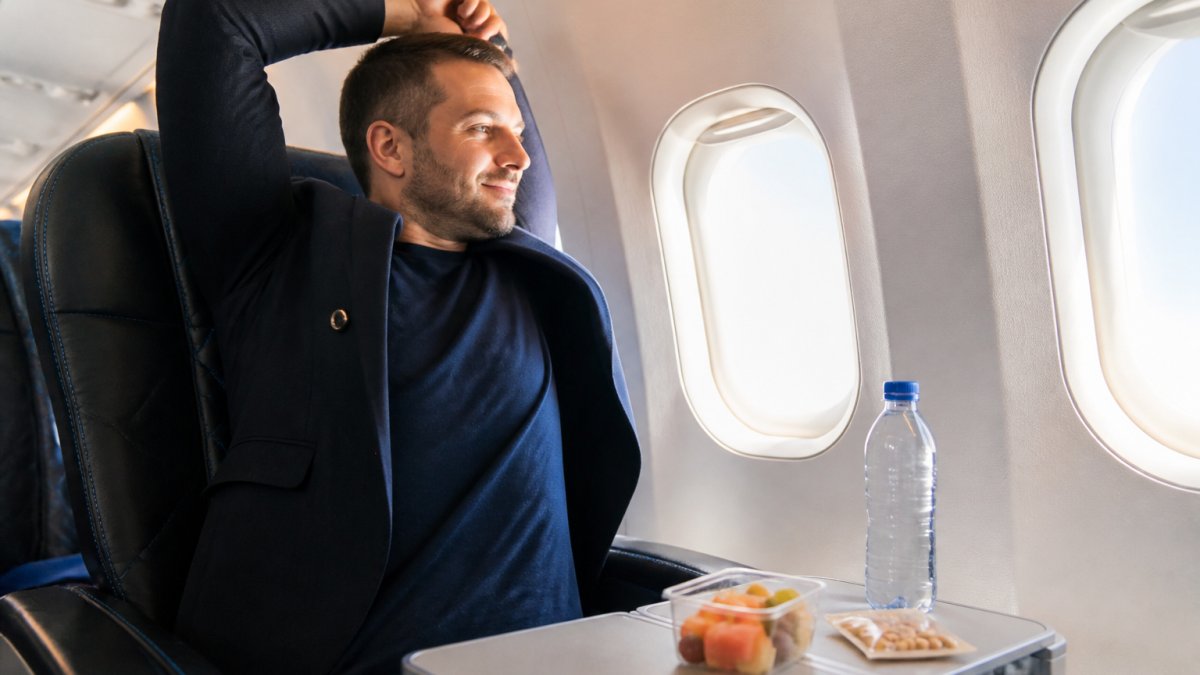
Sitting for more than 4 hours without movement begins to damage circulation and increases the risk of blood clots, particularly in the legs. Airlines now recommend getting up and walking every 2-3 hours on flights longer than 4 hours. This isn't optional for your health, it's essential.
Probiotic + Metabolism Strips →
Set a timer if you need to. Every 2 hours, get up and walk the length of the cabin at least twice. This takes 5 minutes and provides meaningful circulation benefits.
Seated stretches require no space and provide real benefits. Rotate your ankles in both directions for 30 seconds. Extend your legs straight and flex your feet. Lean forward slightly to stretch your hamstrings and lower back. Rotate your shoulders backward and forward.
Compression socks are a legitimate tool for long flights, particularly if you have a history of blood clots or significant risk factors. They maintain circulation in your legs and reduce swelling.
Managing Sleep and Jet Lag
Sleep is where travel health either succeeds or fails. Most travelers arrive at their destination exhausted, which impairs decision-making, increases illness susceptibility, and ruins the first days of their trip. Yet sleeping on flights is genuinely difficult for many people.
Jet lag occurs because your internal circadian rhythm, the biological clock that regulates sleep, hormone production, and digestion, is synchronized to your home time zone.
For flights crossing 3-5 time zones, begin adjusting your sleep schedule 2-3 days before departure. Go to bed 1 hour earlier if you're traveling east, or 1 hour later if traveling west. This gradual adjustment helps your circadian rhythm shift before you arrive.
On the flight itself, adjust your sleep timing based on your destination. If you're flying east and it's nighttime at your destination, try to sleep on the flight. If you're flying west and it's daytime at your destination, try to stay awake.
Light exposure is your most powerful circadian rhythm tool. Sleep Strips provide additional support for managing sleep disruption and jet lag during travel.
Travel Health Checklist: What to Pack and Prepare
A practical travel health checklist prevents last-minute scrambling and ensures you have what you need.
| Item | Purpose | When to Pack |
|---|---|---|
| Prescription medications | Maintain existing health conditions | Always, in original bottles |
| Pain relievers (ibuprofen, acetaminophen) | Address headaches, muscle aches | All trips |
| Antihistamine | Manage allergies, itching | All trips |
| Anti-diarrheal medication | Address digestive upset | All trips, especially international |
| Antacid | Manage indigestion from unfamiliar food | All trips |
| Decongestant | Address congestion from air travel | Longer flights |
| Manage sleep disruption | Overnight flights, jet lag-prone destinations | |
| Digestive + Gut Health Strips | Support gut health during travel | All trips |
| Multivitamin | Cover nutritional gaps | All trips lasting more than 3 days |
| Hand sanitizer | Prevent infection between handwashing | All trips |
| Sunscreen | Protect skin at new destinations | Beach trips, high-altitude travel |
| Insect repellent | Prevent insect-borne illness | Tropical destinations |
| First aid supplies | Address minor injuries | All trips |
Beyond items, prepare information: your doctor's contact information, your insurance information, and a list of medications you take with dosages. Store digital copies in your phone and email yourself a backup. This information matters if you need medical care abroad.

Recovery and Warning Signs After Travel
Your trip doesn't end when you land. The 3-7 days after returning home are critical for preventing post-travel illness and accelerating recovery from jet lag and travel fatigue.
Continue hydration aggressively for 2-3 days after arrival. Magnesium Glycinate supports relaxation and recovery during the post-travel adjustment period. Your body is still recovering from the dehydration of travel. Drink water consistently, particularly if you're experiencing jet lag or fatigue.

Sleep is where recovery happens. If you're jet-lagged, maintain the sleep schedule adjustment strategy for 2-3 days after arrival. Seek light exposure at the right times. A Magnesium Glycinate supplement supports relaxation and sleep quality during this adjustment period.
Watch for warning signs of post-travel illness. A sore throat, cough, or congestion within 3-5 days of travel is typical, your immune system is processing exposure from your trip. This usually resolves on its own with rest and hydration.
Digestive issues are common post-travel. Digestive + Gut Health Strips support your microbiome's recovery and normal digestive function during this adjustment. Unfamiliar food, dehydration, and travel stress all disrupt digestion. Digestive + Gut Health Strips support your microbiome's recovery and normal digestive function during this adjustment.
Building Your Travel Wellness Routine
The most resilient travelers don't treat wellness as something they do during trips, they treat it as a routine that travels with them. This means pre-trip preparation becomes automatic, in-flight habits become instinctive, and post-trip recovery becomes expected.
Your travel wellness routine starts with the non-negotiables: consistent hydration, regular movement, strategic sleep, and infection prevention through handwashing. These four elements prevent most travel-related illness and fatigue. Everything else, supplements, snacks, sleep aids, supports these fundamentals.
The practical advantage of BetterByStrips products is that they eliminate friction from this routine. Fast-dissolving strips that require no water mean you can maintain your wellness strategy anywhere, anytime. No fumbling with pills and water bottles on a flight. No forgetting supplements because they're buried in your checked bag. No compromise on your health because convenience failed you.
Frequently Asked Questions
What should I pack in a travel health kit to stay healthy while traveling?
A travel health kit should include hand sanitizer, medications you take regularly, basic pain relievers, antacids, and any prescription medicines in their original containers. Add adhesive bandages, antibiotic ointment, and sunscreen. For frequent travelers, portable [Probiotic + Metabolism Strips](https://betterbystrips.com/products/probiotic-metabolism-strips) or [Digestive + Gut Health Strips](https://betterbystrips.com/products/digestive-gut-health-strips) eliminate the need for water and save luggage space. Keep medications in your carry-on bag, and store everything in a cool, dry place. Check destination regulations for restricted items before packing.
How can I avoid getting sick while traveling by air?
Minimize illness risk by washing your hands frequently, using hand sanitizer after touching shared surfaces, and avoiding touching your face. Stay hydrated throughout the flight, as cabin air is dry and dehydration weakens immunity. Wear a mask if you prefer extra protection. Eat nutrient-dense snacks to maintain energy and immune function. Get adequate sleep before your flight, and consider [Magnesium Glycinate](https://betterbystrips.com/products/magnesium-glycinate) capsules or [Digestive + Gut Health Strips](https://betterbystrips.com/products/digestive-gut-health-strips) to maintain wellness routines. Avoid alcohol and excessive caffeine, which increase dehydration.
What are the best healthy snacks for travel?
Choose nutrient-dense snacks that don't require refrigeration: nuts, seeds, dried fruit, whole-grain crackers, and fresh fruit like apples or oranges. Protein bars, cheese, and jerky provide sustained energy. Avoid salty foods that increase dehydration; instead, pair snacks with plenty of water. Pack snacks in your carry-on to avoid airport food temptations, and eat regularly to maintain stable energy and prevent overeating at restaurants or fast food stops.
How can I sleep better on a long flight?
Adjust your sleep schedule 2-3 days before travel to match your destination's time zone. Wear comfortable clothing and bring a neck pillow and eye mask. Avoid caffeine and alcohol, which disrupt sleep quality. On long flights, take a [Magnesium Glycinate](https://betterbystrips.com/products/magnesium-glycinate) supplement to support relaxation and muscle recovery. Move around the cabin every 2-3 hours to prevent stiffness. Choose a window seat if possible, and keep your area cool and dark. Aim to sleep during nighttime hours at your destination to minimize jet lag.
What is the 3-3-3 rule for travel?
The 3-3-3 rule helps manage jet lag: spend 3 days before travel adjusting your sleep schedule, 3 hours before departure preparing your body (hydrating, eating well), and 3 days after arrival allowing your circadian rhythm to adjust. This timeline supports your body's natural adaptation to new time zones. During this period, maintain consistent meal times, stay active, and get sunlight exposure. Portable wellness products can help maintain focus during the adjustment phase.
What should I do if I get sick after traveling?
Monitor for common travel-related illnesses like respiratory infections, digestive upset, or jet lag fatigue. Rest, stay hydrated, and eat bland, nutrient-dense foods. If symptoms persist beyond a few days, consult a healthcare provider. Consider [Digestive + Gut Health Strips](https://betterbystrips.com/products/digestive-gut-health-strips) or [Probiotic + Metabolism Strips](https://betterbystrips.com/products/probiotic-metabolism-strips) if you experience stomach issues from dietary changes. Watch for warning signs like high fever, severe dehydration, or difficulty breathing, which require immediate medical attention. Keep records of where you traveled and any symptoms to help your doctor if needed.
How do I stay healthy on road trips and non-flight travel?
For road trips, take movement breaks every 2 hours to stretch and walk. Pack a cooler with hydrating beverages and healthy snacks like fresh fruit and nuts. Avoid excessive caffeine and sugary drinks that cause energy crashes. Wear a seat belt and maintain good posture to prevent back strain. For cruises, practice hand hygiene, stay hydrated in the salt-air environment, and balance relaxation with physical activity. Portable [Energy Strips](https://betterbystrips.com/products/energy-strips) or [Digestive + Gut Health Strips](https://betterbystrips.com/products/digestive-gut-health-strips) provide convenient wellness support without requiring water, making them ideal for any travel type.
How can I maintain healthy habits when I travel for work?
Plan your wellness routine before departure: identify times for exercise, set hydration reminders, and pack portable snacks. Use hotel gyms or take walking meetings. Maintain consistent sleep schedules despite time zone changes. Bring a [Complete Multivitamin](https://betterbystrips.com/products/complete-multivitamin) or [Probiotic + Metabolism Strips](https://betterbystrips.com/products/probiotic-metabolism-strips) to fill nutritional gaps from eating out. Schedule meals at regular times to avoid skipping. Stay accountable by setting daily health goals. Portable, discreet wellness products fit easily into busy work schedules and back-to-back meetings, helping you stay consistent without extra effort or preparation.
Staying healthy while traveling is achievable with planning, but only if your wellness tools actually work in real conditions. Get started with BetterByStrips and experience the difference that truly portable, genuinely effective wellness makes, faster sleep onset on flights, stable energy throughout your trip, and faster recovery when you return home.
